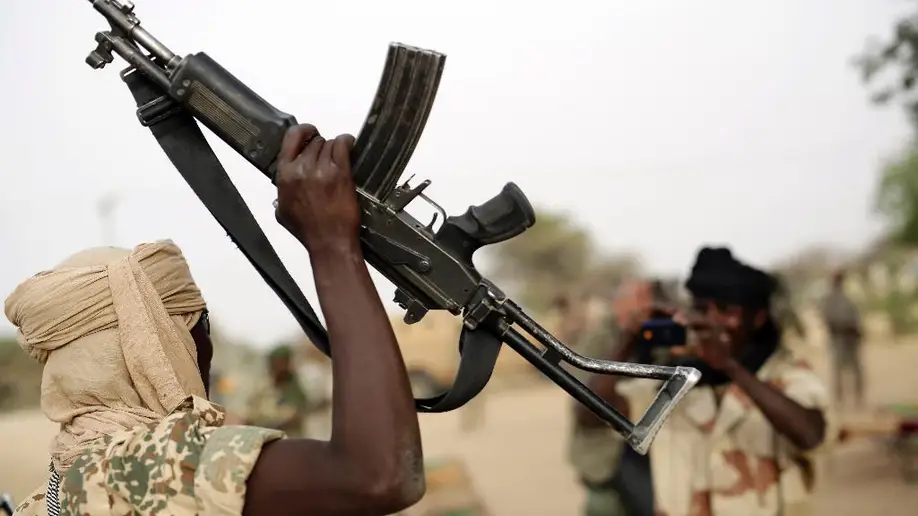
Nigeria's military has announced that troops killed 48 Islamist fighters following attacks on military positions in the northeastern states of Borno and Yobe.
The operation took place after suspected members of Boko Haram and its splinter organisation, Islamic State West Africa Province (ISWAP), launched overnight assaults on military locations.
According to a statement reported by Reuters on Friday, October 30, Nigerian troops received air support while defending their positions and launching counter-offensive operations against the attackers.
The military described the operation as a successful response to coordinated attacks targeting security installations in the region.
How the Attacks Happened
Military spokesperson Captain Mohammed Goni said the attackers targeted two locations: Bitta in Borno State and a military training school in Buni Yadi, Yobe State.
Troops stationed in Bitta reportedly repelled an overnight assault by insurgents.
Following the initial confrontation, Nigerian forces launched a counter-offensive against ISWAP fighters who attacked the military training facility in Buni Yadi.
The fighting continued into the early hours of Friday, with air support helping ground troops respond to the attacks.
The military subsequently reported that 48 insurgents had been killed during the operations.
Were Nigerian Soldiers Also Killed?
Although the military described the operation as successful, Nigerian forces also suffered casualties.
According to Captain Goni, one soldier was killed during the fighting, while two others sustained light injuries.
The injured personnel were receiving medical treatment.
The military did not provide further details about the identities of the casualties.
Why Boko Haram and ISWAP Continue Attacking Military Bases
Boko Haram and ISWAP have remained major security threats in northeastern Nigeria for years.
The two organisations have carried out attacks against military installations, rural communities and civilian targets across the region.
Their activities have contributed to displacement, economic disruption and a prolonged humanitarian crisis.
Although Nigerian security forces have conducted numerous military operations against the groups, insurgent attacks have continued.
Reuters reported that attacks on military positions in the region have increased in recent weeks despite years of counter-insurgency operations.
The latest assaults demonstrate the continuing challenges facing security forces in the northeastern part of the country.
What This Means for Residents of Borno and Yobe
For residents of Borno and Yobe, continued attacks create uncertainty and concerns about personal safety.
Military installations are important to security operations because they provide locations from which troops can coordinate patrols, respond to threats and protect surrounding communities.
When these positions come under attack, security personnel must respond quickly to prevent insurgents from gaining ground.
However, residents also need sustained protection, improved security infrastructure and access to essential services.
Can Nigeria Completely Defeat Boko Haram and ISWAP?
The reported killing of 48 insurgents represents a significant military claim, but it does not necessarily mean the insurgency is close to ending.
Defeating established armed groups requires more than battlefield operations.
Security experts frequently point to the importance of intelligence gathering, border monitoring, economic development, community cooperation and efforts to prevent recruitment into extremist organisations.
The Nigerian government must also address the conditions that allow armed groups to maintain influence in vulnerable communities.
What Happens Next?
The military is expected to continue operations against insurgent groups in northeastern Nigeria.
The latest confrontation highlights the importance of protecting military positions while preventing further attacks on surrounding communities.
For now, the military's reported operation represents another major development in Nigeria's prolonged fight against Boko Haram and ISWAP.
Residents will be hoping that continued security operations translate into lasting peace and improved safety across the region.