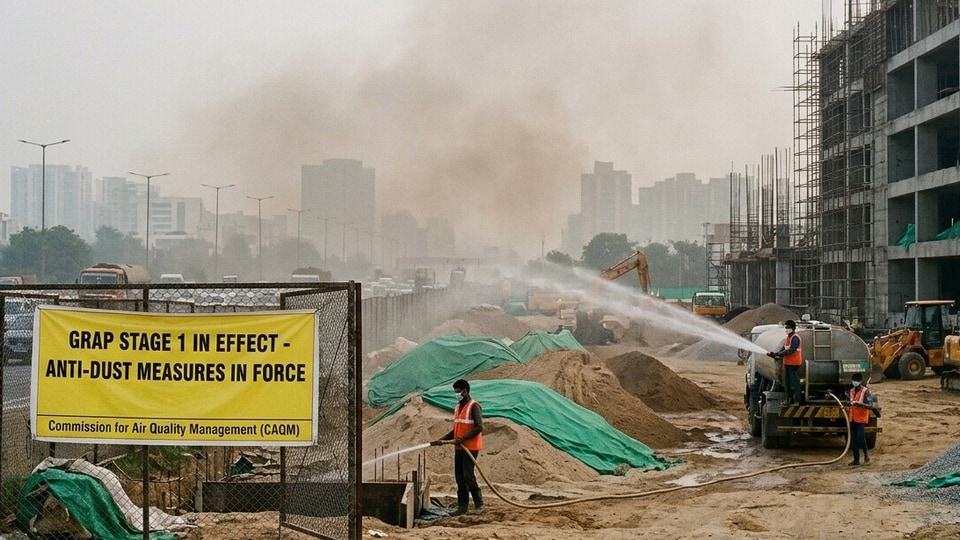
GRAP 1 Restrictions Imposed in Delhi-NCR as Air Quality Worsens
Authorities have imposed Stage 1 measures under the Graded Response Action Plan (GRAP) across Delhi-NCR after air pollution pushed the region into the poor air quality category.
According to reports published on October 21, 2026, the Commission for Air Quality Management (CAQM) introduced the measures as Delhi’s Air Quality Index (AQI) rose to 244 at 2 pm. The reading placed the capital in the poor category, prompting authorities to intensify pollution-control efforts.
The decision comes as air pollution becomes a growing concern for residents, with officials seeking to prevent conditions from deteriorating further.
What Is GRAP Stage 1?
The Graded Response Action Plan is a system of measures used to address air pollution in Delhi and the surrounding National Capital Region.
Stage 1 applies when the AQI falls between 201 and 300, which is classified as poor air quality under India's AQI system.
The measures focus on controlling pollution from construction activities, road dust, vehicles, waste burning and other sources. Authorities across the region have been directed to implement, monitor and review the measures.
Key Restrictions Under GRAP 1
The Stage 1 measures include several actions intended to reduce emissions and control dust pollution.
- Construction dust control: Construction and demolition sites must follow prescribed dust-control requirements. Certain larger projects must meet applicable registration and monitoring conditions.
- Ban on open waste burning: Burning garbage, leaves and other waste in the open is prohibited.
- Restrictions on coal and firewood: The use of coal and firewood in tandoors at hotels, restaurants and open eateries is restricted under the applicable rules.
- Diesel generator controls: Diesel generator use is restricted, subject to permitted essential and emergency exceptions.
- Action against polluting vehicles: Authorities are expected to enforce pollution-control requirements and take action against visibly polluting vehicles.
- Road dust management: Agencies are directed to intensify road cleaning, mechanical sweeping and water sprinkling where appropriate.
- Traffic management: Traffic personnel may be deployed at congested locations to improve vehicle movement and reduce unnecessary emissions.
- Waste management: Authorities are expected to prevent illegal dumping and improve the collection and disposal of waste.
The precise requirements depend on the applicable GRAP schedule and official directions issued by the relevant authorities.
Why Has Delhi's Air Quality Deteriorated?
Delhi's AQI was reported at 179 on October 20 before rising to 244 at 2 pm on October 21, moving from the moderate category into the poor category.
Reports also pointed to the period following Dussehra celebrations, when effigy burning and firecrackers can contribute to pollution. Weather conditions, including changes in wind speed and falling temperatures, can also affect how quickly pollutants disperse.
Air quality is influenced by several factors, including vehicle emissions, construction dust, industrial activity, waste burning and weather conditions.
What Should Residents Do?
Residents can help reduce pollution by taking practical steps in their daily routines.
- Avoid burning rubbish, leaves or other waste outdoors.
- Switch off vehicle engines when waiting at traffic signals for extended periods.
- Keep vehicles properly maintained and follow pollution-control requirements.
- Consider public transport when practical.
- Check official air-quality updates before exercising outdoors when pollution levels are high.
- Follow health advisories, especially if children, older adults or people with respiratory conditions are present.
People experiencing breathing difficulties or other concerning symptoms should seek appropriate medical advice.
Will Schools and Offices Close Under GRAP 1?
GRAP Stage 1 does not automatically mean that schools and offices must close. The measures primarily focus on reducing pollution at its sources.
Any changes to school schedules, office arrangements or other public activities depend on separate decisions by the relevant authorities and any subsequent escalation of pollution-control measures.
If air quality worsens, authorities may consider additional stages of GRAP, which introduce more stringent restrictions.
What Happens Next?
The CAQM has directed implementing agencies across Delhi-NCR to enforce and monitor Stage 1 measures to prevent further deterioration in air quality.
Authorities will continue assessing pollution levels and forecasts to determine whether the current measures are sufficient or stronger action is needed.
For residents, the immediate priority is to follow local pollution advisories, reduce avoidable emissions and take sensible precautions during periods of poor air quality.
The introduction of GRAP Stage 1 highlights the importance of coordinated action by authorities, businesses and the public as Delhi-NCR enters another period of concern over air pollution.